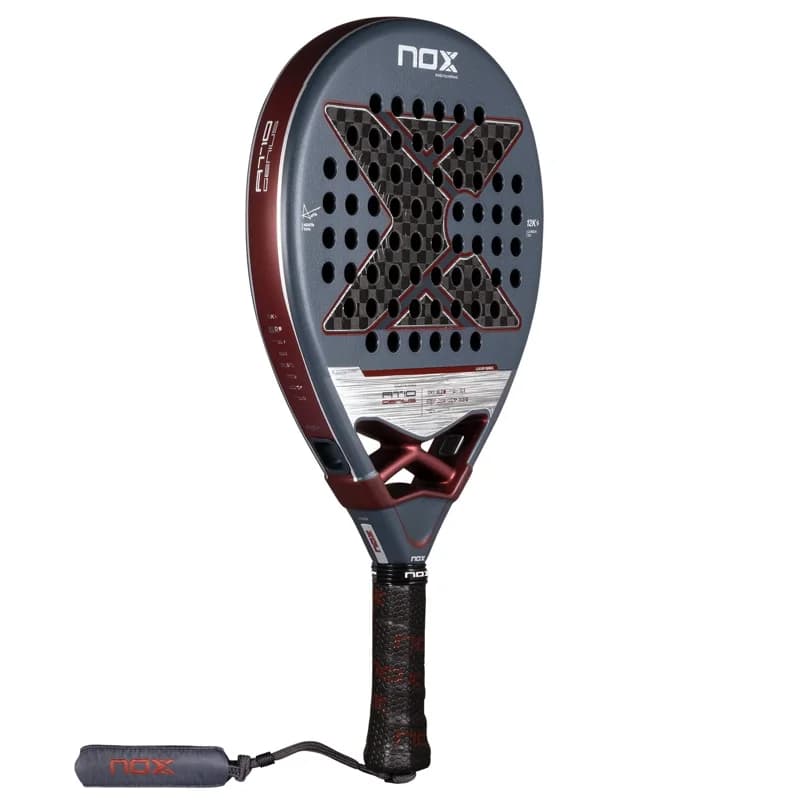
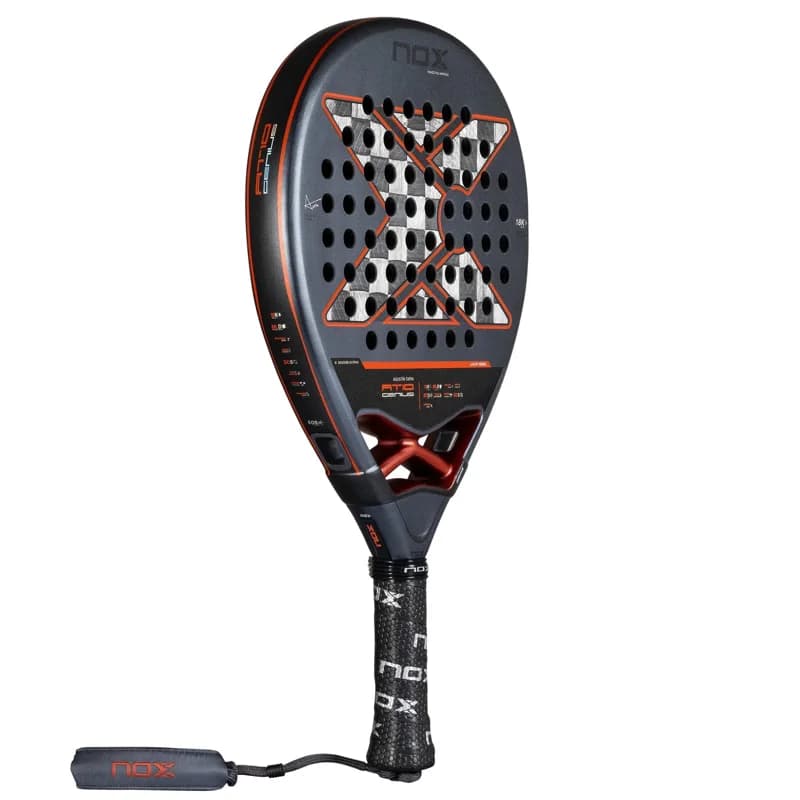
The useful differences
| Decision | NOX AT10 Genius 12K 2025 | NOX AT10 Genius 18K Alum 2025 |
|---|---|---|
| Exact variant | 2025 12K teardrop | 2025 18K Alum teardrop |
| Response in Penso’s test | Firmer and more explosive | More forgiving and versatile |
| Attacking emphasis | Forceful volleys and smashes | Attack with easier defensive response |
| Main comparison point | Can you control the firmer response? | Does the extra release help under pressure? |
Carbon numbers are not a ranking
Within this 2025 pair, Penso places the 12K on the firmer, more attacking side and the 18K Alum on the more forgiving side. A larger fibre count is therefore not a reliable shortcut to stiffness or quality. Compare the exact rackets rather than importing a rule from another brand or generation. Both profiles identify the teardrop model, separate from the head-heavier Attack versions.
Use defence to break the tie
Penso credits the 18K with more tolerance and easier ball release when defending, while favouring the 12K for explosive attacking shots. For a player torn between them, the low defensive ball is more informative than a comfortable smash feed. If you frequently need help getting a controlled return deep from a short swing, start with the 18K. If you already manage those exchanges and actively want a firmer response on volleys, add the 12K to the same demo.
Keep the year and shape fixed
Do not let a retailer substitute a 2026 model or an Attack because the name begins AT10. Penso treats the diamond Attack models as a different balance and handling proposition. A comparison of the teardrops cannot establish the same result for those rackets. The orange-accented 2025 18K Alum and red-accented 12K are the editions behind this choice.
A useful side-by-side demo
With the same partner and comparable feeds, alternate a defensive block, a controlled volley and an overhead. Repeat the defensive sequence after several quick exchanges rather than testing it only when fresh and fully prepared. Choose the response that keeps your normal ball under control. There is little value in a stronger best-case finish if it creates more errors in the shots that lead to it.
What this evidence can decide
The playing comparison comes from Stéphane Penso’s one side-by-side article in Padel Magazine. The two profile summaries are not two independent tests. His observed trade-off gives a sensible demo order, but does not establish universal agreement or a house winner. Open the original review for his full range discussion, then use the exact-edition profiles to keep the alternatives straight.
Read the original comparison
Stéphane Penso’s full review · Padel Magazine
Find a club for your next game or choose a lesson before changing equipment.